1. Decide whether movement is necessary
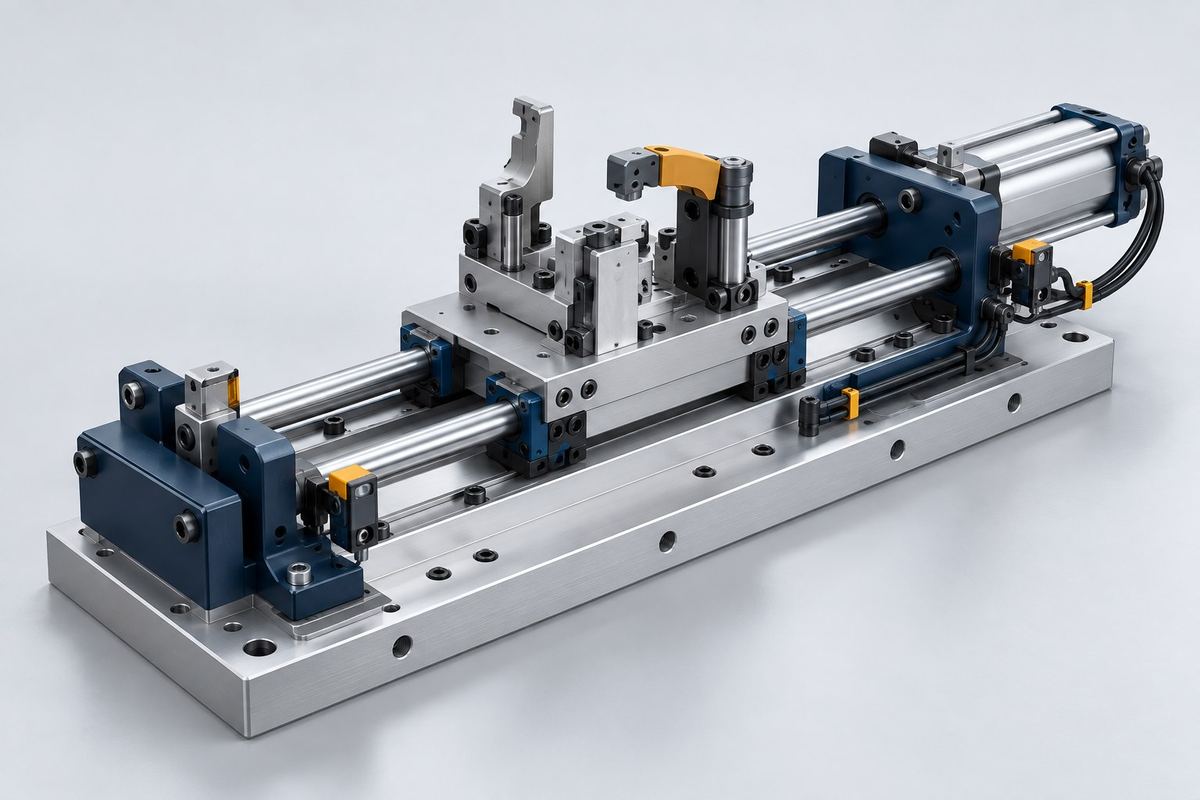
Start from the process layout. A slide is justified when tooling must enter after loading, withdraw before unloading, or clear another moving device. If the same requirement can be met with a simpler fixed or swing unit, that option may reduce cost and maintenance.
2. Define load, direction and stroke
Document the carried mass, centre of gravity, process forces, installation orientation, usable stroke and expected cycle frequency. These inputs guide the selection of rails, guide blocks, actuator, mounting structure and safety factor.
3. Separate guidance from actuation
The linear guide should resist moments and maintain alignment, while the pneumatic or electric actuator provides motion. Precision hard stops establish repeatable end positions. Relying on cylinder end travel alone can make the working position inconsistent.
4. Validate the full moving envelope
Check the complete swept volume of the slide, attached tooling, brackets, sensors, cables and hoses. Review over-travel, pinch zones, contamination, weld spatter, lubrication access and removal of service components.
5. Build a safe operating sequence
The PLC or cell logic should confirm retracted and advanced sensor states before permitting dependent motions. A sequence chart should account for loss of pressure, missing sensor feedback and recovery after an interrupted cycle.